
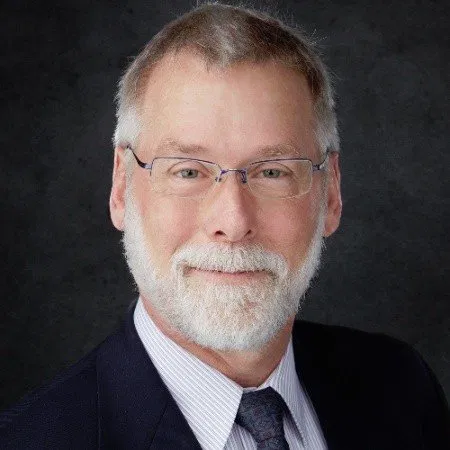
An engineer's eye on retirement
I graduated from Syracuse University in 1979 with a degree in Industrial Engineering and Operations Research. If that sounds far from retirement planning, stay with me, it's the whole reason I do this the way I do.
Operations Research is the science of making the best decision you can under real-world constraints: limited time, limited resources, competing priorities, and a future you can't fully predict. My first career put that training to work. I spent 35 years at IBM, where I got a front-row education in how complex systems actually behave, and how the right plan turns a tangle of moving parts into something you can steer.
Retirement, it turns out, is the same kind of problem. You have finite resources, a timeline nobody can see the end of, and a long list of things you want the years ahead to deliver. The job is to optimize all of it together. That's not a sales pitch, it's literally what I was trained to do.
The plan that was only one-third right
In my twenties, the going wisdom was simple: a responsible adult keeps a roof overhead, food on the table, and clothes on your back. Live within your means, save for a rainy day. Good advice, as far as it went.
About eighteen years later, just after I married, a financial advisor at a well-regarded firm wrote me a retirement plan. I still remember one number from it: it assumed I'd need 80% of my salary once I retired. It used the 4% withdrawal rule to show how big my nest egg had to be by a certain age. It was a solid effort for its time, and I'll be honest, I think I missed that target age.
What stuck with me, years later, was something the plan never said out loud. That missing 20%? That was supposed to be what I was saving along the way. And the whole exercise treated retirement as a single math problem: accumulate enough money, then spend it down carefully.
By my mid-sixties, I'd figured out, on my own, the hard way, that money is only one-third of the picture. A well-funded retirement spent in declining health, or in isolation, isn't the retirement anyone is actually hoping for.
Three realms, not one
A five-star retirement rests on three things, and they matter in equal measure:
- Health, a healthspan that keeps pace with your lifespan, so you can live independently for as long as possible.
- Self, the happiness that comes from becoming the person you want to be, and from time spent with the people you care about, including the freedom and desire to make new friends.
- Wealth, the comfort of an income that genuinely supports the lifestyle you want, not just the bills you have to pay.
A great retirement is built on an adulthood of quietly stacking up wins in all three. That conviction is the foundation of everything VyKare does.
Why I built VyKare
In the summer of 2017, I added Medicare certification to my Life and Health insurance practice, and it's been deeply rewarding work. But the Pandemic clarified something for me: helping a senior with Medicare alone, as important as it is, was never going to add up to the complete retirement I believed people deserved. Health coverage is one piece. Income, care, legacy, wellbeing, those are the rest of it, and most seniors are left to assemble them alone.
So I built VyKare Seniorhood Advisors to bring all of it under one roof: an engineer's approach to the whole system, not just one corner of it.
Where to start
The best first step costs you nothing but a little honest reflection. Take stock of your now across all three realms, Health, Self, and Wealth, and let's see where you stand.